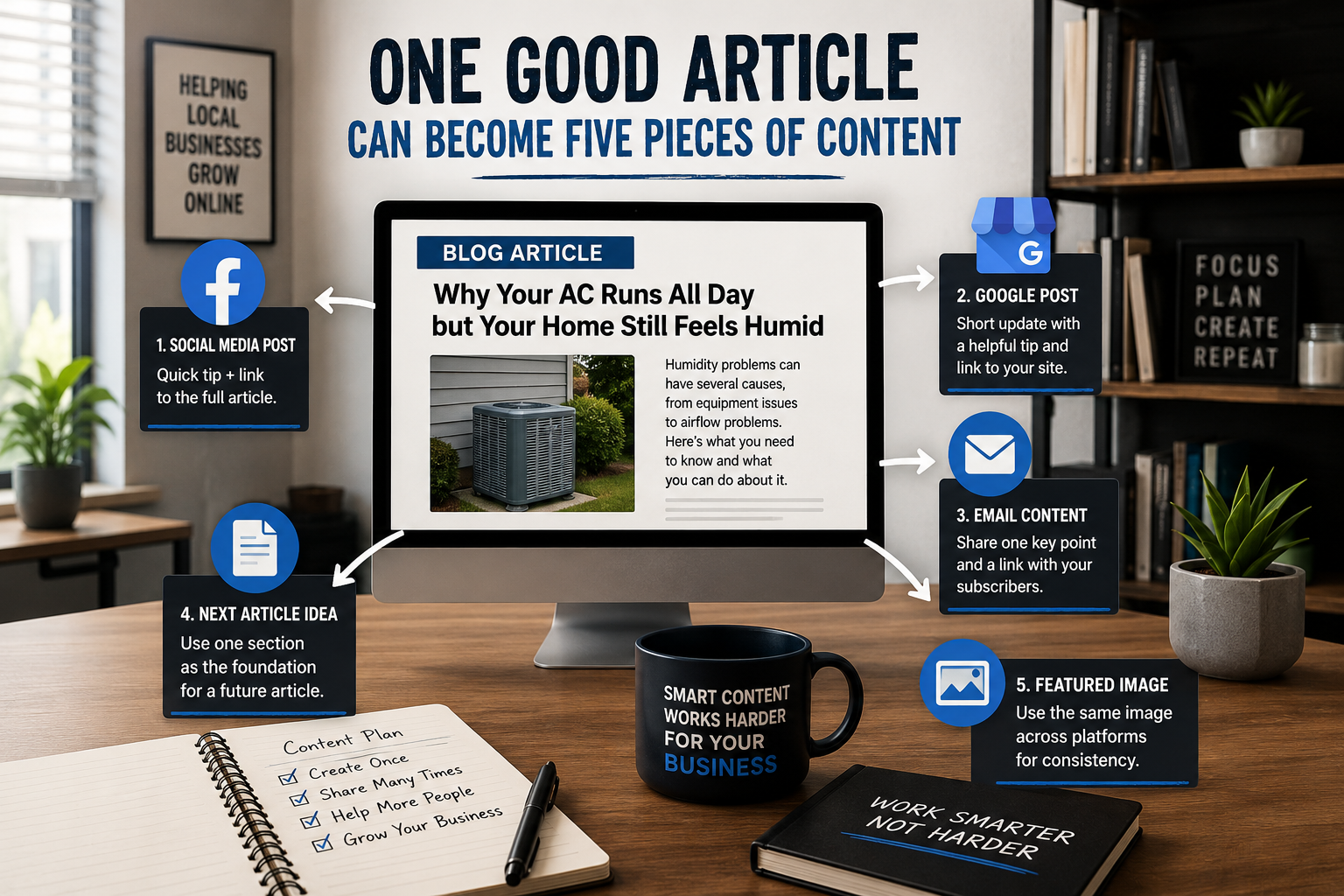
Small businesses often believe they have a content-idea problem when they actually have a listening problem. Customers are already supplying topics every week. They ask what something costs, whether a repair is worth it, how long a service takes, what they should buy, what they should avoid and what happens next.
One good question can support a surprising amount of useful content if the business expands the answer instead of copying the same paragraph into seven formats.
Start With the Full Answer
Write the best version of the answer first. Usually that means an article or detailed FAQ page that includes the context you would give a customer in person. Explain why the question matters, what variables change the answer, common mistakes and what the reader should do next.
This becomes the source material for everything else. The smaller pieces should come from the complete explanation rather than forcing a short social post to do the work of a full article.
Create a Short FAQ Version
Take the core answer and reduce it to a few clear sentences for an FAQ section. Link to the longer article when the subject deserves more detail. This gives visitors a fast answer without making the service page carry an essay.
Pull Out Three Social Posts
Do not post the same article link three times with different emojis. Identify three different ideas inside the answer. One post can explain the common misconception, another can give a practical tip, and a third can ask the audience how they handle the issue.
Now the social content is useful even if nobody clicks, while the article remains available for people who want the complete explanation.
Turn the Question Into a Short Video
A thirty- to sixty-second video can answer the question conversationally. The owner does not need a studio. A clear explanation, decent audio and a relevant visual often work better than an overproduced clip that never reaches the point.
Use the article as preparation, not as a teleprompter. Explain the answer the same way you would if a customer asked across the counter.
Use the Longer Explanation in Email
The question can become a newsletter section or customer email, particularly if it addresses something people regularly misunderstand before buying. Email readers already gave the business permission to communicate, which makes practical education a better fit than constant promotion.
Create a Sales or Support Snippet
If staff answer the same question repeatedly, turn the approved explanation into an internal response template. The employee can personalize it instead of typing from zero every time. This is content repurposing that never appears publicly but may save more time than the social posts.
Build the Follow-Up Questions
Every good question creates others. If the original question is “How much does this cost?” the next questions may be “What changes the price?”, “What should I prepare before requesting a quote?”, “What makes the cheaper option different?” and “When is repair no longer worth it?”
Those can become next month’s article topics. Content planning becomes much easier when each useful answer points naturally toward the next thing a customer needs to know.
Do Not Stretch a Thin Question Into Filler
Not every question deserves twelve pieces of content. “What time do you close?” belongs on the contact page and business listing. The best source questions have nuance: choices, tradeoffs, misconceptions, costs, preparation or decisions.
The goal is not maximum output. The goal is maximum usefulness from thinking the business already had to do.
Use AI to Help With Formats, Not to Invent the Experience
AI is excellent at taking a completed answer and adapting it into a shorter post, outline, email or script. The business should provide the facts, examples and judgment. That is how the result stays specific instead of turning into the same generic advice every competitor can generate.
A Simple One-Month Example
Week one: publish the full article and one social post. Week two: publish a short tip and add the FAQ version to the service page. Week three: record the short video and send the email. Week four: publish the misconception post and add the internal response template to the team’s workflow. One customer question has now improved the website, social presence, email list and customer service without pretending every platform needed a brand-new idea.
The Bottom Line
Small-business content does not need to begin with a brainstorming session titled “What should we post?” Start with what customers are already asking. Answer it properly once, then adapt that useful answer to the places where customers encounter the business.
A month of content can begin with one sentence from a real person who needed help.