The Hyper3D ad makes a claim that would have sounded ridiculous a few years ago: upload one image and turn it into an editable, reusable, production-ready 3D model. The underlying technology is real. Hyper3D’s Rodin system can generate textured geometry from a single image, and the platform exports common formats used in games, visualization, AR, and 3D workflows. The part worth examining is the phrase production-ready, because that means very different things depending on whether you are making a background prop, a hero character, a 3D print, or an asset that needs to survive animation and close-up rendering.
What Rodin Actually Generates
Hyper3D’s image-to-3D documentation says one image is enough for most objects, while additional views can improve detail and control. The service analyzes shape, depth, silhouette, and surface information, then produces geometry and textures that can be exported as formats including GLB, OBJ, FBX, USDZ, and STL. Those are useful deliverables, not screenshots pretending to be 3D. A creator can actually move the result into Blender, a game engine, a printing workflow, or another DCC package.
The Missing Information in a Single Photograph
A photograph shows only what the camera saw. The back of an object, hidden surfaces, exact dimensions, mechanical joints, topology around moving parts, and material properties may not be visible at all. An AI model has to infer those missing pieces. Sometimes the inference is perfectly adequate; sometimes it creates a plausible back side that is completely wrong. That is why additional reference views, measurements, and human cleanup remain important when accuracy matters.
“Nearly Production-Ready” Is the More Useful Phrase
Hyper3D’s own pricing and product pages frequently use the more cautious phrase nearly production-ready. That wording is much closer to reality. A generated asset may need retopology, UV cleanup, texture correction, scale adjustment, collision geometry, rigging, LODs, naming conventions, or optimization before it belongs in a real production pipeline. None of that makes the tool a failure; eliminating the blank-mesh stage can still save enormous amounts of time. It simply means AI generation is a starting point with unusually good leverage, not a magic replacement for every downstream task.
The Free Plan Is Also a Preview Model
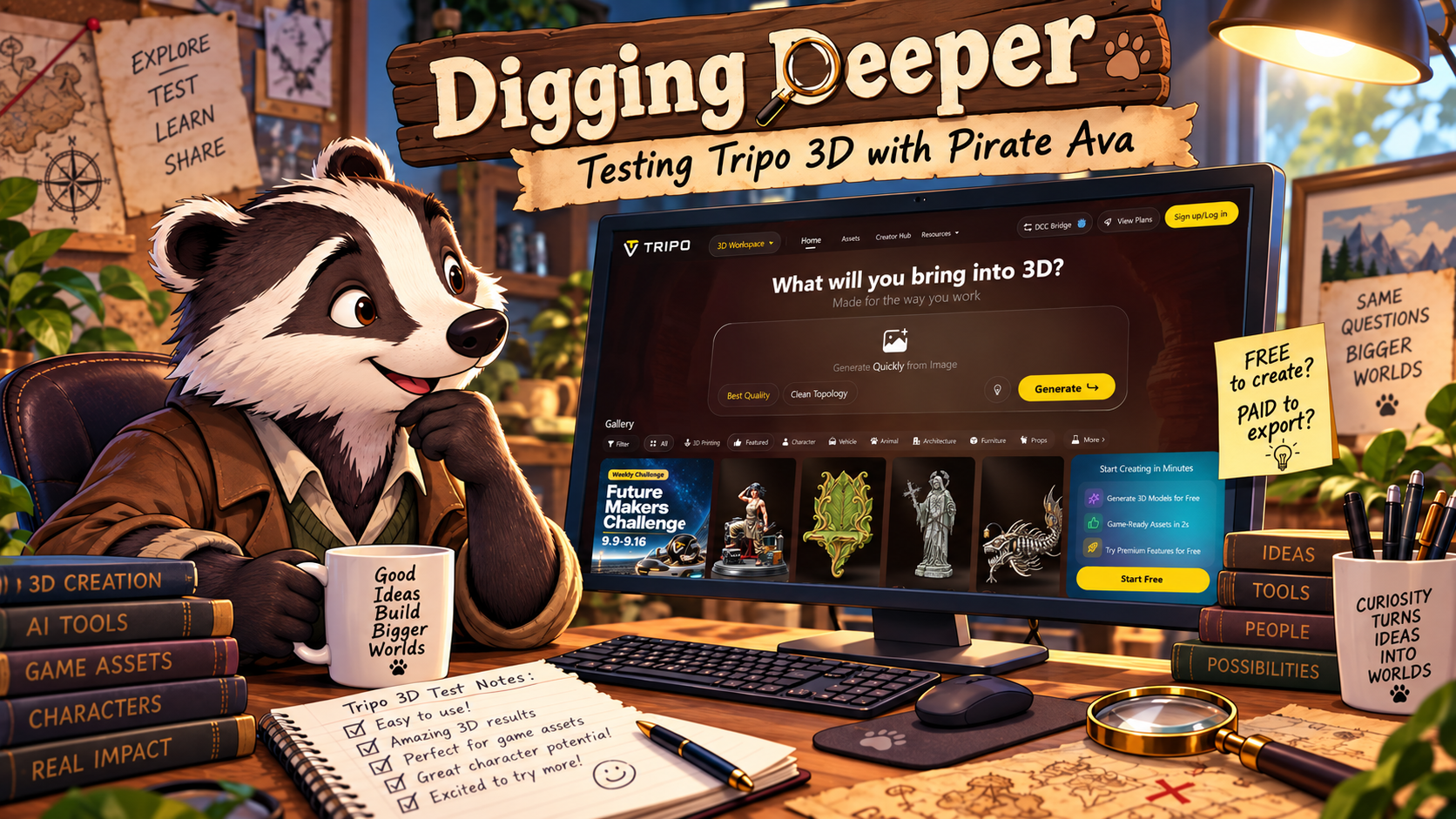
Hyper3D currently offers a free tier that lets users explore generation and preview results before committing credits, while paid Creator and Business plans add features such as multi-image generation, higher quality options, more redos, private assets, and API access. The company’s pricing page makes clear that serious production use eventually becomes a credit and subscription decision. That is worth calculating if you expect to generate dozens or hundreds of models rather than an occasional prop.
Where This Is Genuinely Powerful
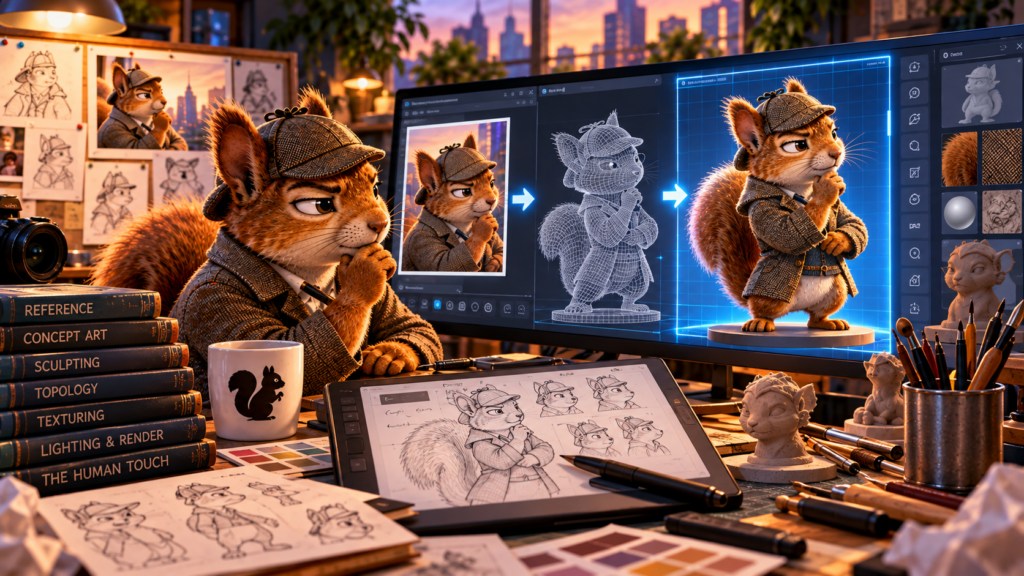
For concept artists, indie developers, tabletop creators, product visualizers, and small studios, image-to-3D can dramatically accelerate iteration. A rough object can be generated, evaluated from every angle, modified, rendered, printed, or replaced without spending a day modeling each idea from scratch. The most productive workflow is often AI plus traditional tools: generate the first pass, then let a person decide what deserves cleanup. That is very different from expecting the generator to understand every technical requirement automatically.
Bottom Line
Rodin makes the core promise of the ad believable: one image really can become a usable 3D asset in minutes. The squirrely part is treating “production-ready” as a universal condition rather than a project-specific judgment. If the generated mesh already meets your needs, great—you just saved hours. If it needs topology, rigging, optimization, or art direction, the AI still did valuable work. It just did not fire the artist.